

Azerbaijani Spring Roach (Pseudophoxinus atropatenus) Case Study
Home > Biodiversity Nature & People > Conservation Philanthropy > Grants > MBZF Grant 162514342
Continent: Asia
Country: Azerbaijan
Grant Amount: $7,000
Awarded Date: February 05, 2017
Oleg Artaev
Mordovian state nature reserve
Pobedy 13-30
Saransk
Mordovia
430013
Russian Federation
Tel: +78342750521
Mob: +79271702008
Survey of two critically endangered and restricted endemic species of the genus Pseudophoxinus in Caucasus to set up conservation plan

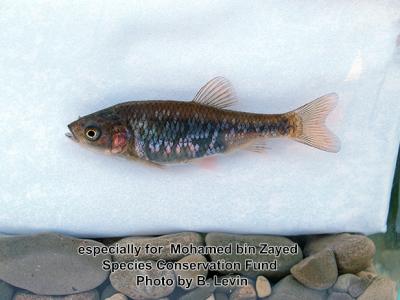
Caucasus is a large mountain system located between the Black and Caspian seas. It is considered as one of the world's biodiversity "hotspots" under conservation priority. However, at this center of biodiversity has a rare species with limited habitat, about which almost nothing is known. These species are fishes of the genus Pseudophoxinus. In the Caucasus known two species: Pseudophoxinus atropatenus and Pseudophoxinus sojuchbulagi. They both have a conservation status in IUCN Red List Criticelly Endangered.
Pseudophoxinus atropatenus was described by A. Derzhavin in 1937 from the Turianchay river - tributary of Kura river. Initial information on the biology were published before 1960. Pseudophoxinus sojuchbulagi was described by Y. Abdurakhmanov in 1950. it was last recorded in 1949. No more information about species.
Restricted distribution and limited information about the species that live in the area of intensive human activities (extensive earthworks, overgrazing), putting them at risk of extinction, and raises the need to undertake field study of these species and habitat surveys as soon as possible. Lack of knowledge, and as a result, the lack of protection of the species has led to probable extinction P. sojuchbulagi.
Our work is aimed at a thorough study of species distribution and more profound study of them to develop on received information practical recommendations for the species conservation.
Work is planned in the following directions. 1. Search habitats, area refinement and clarification abundance of the species. 2. The study of ecology of the species. 3. Conservation genetic research. 4. Identification of threats, development of conservation measures.
And thus we hope that our work will lead them to conservation.
Grant document
The text and images for this case study are uploaded by the grant recipient to raise awareness of the conservation work being done. Through its website the Fund provides the platform, but is not responsible for text or image content of case studies. We would like to sincerely thank the recipient for uploading a case study.
