

Parosphromenus barbarae (Parosphromenus barbarae) Case Study
Home > Biodiversity Nature & People > Conservation Philanthropy > Grants > GEF Grant 260544061
Continent: Asia
Country: Indonesia
Grant Amount: $4,800
Tri Prabowo
ENVIIRO Foundation
Jl. Lintas Sumatera Perumnas Sungai Piul
Merangin
Jambi
37313
Indonesia
Tel: +62 823-0667-3464
Mob: +62 823-0667-3464
Rediscovery, Distribution Mapping, and Conservation Assessment of the Potentially Extinct-in-the-Wild Bornean Endemic Licorice Gourami Parosphromenus barbarae in Indonesian Peat Swamp
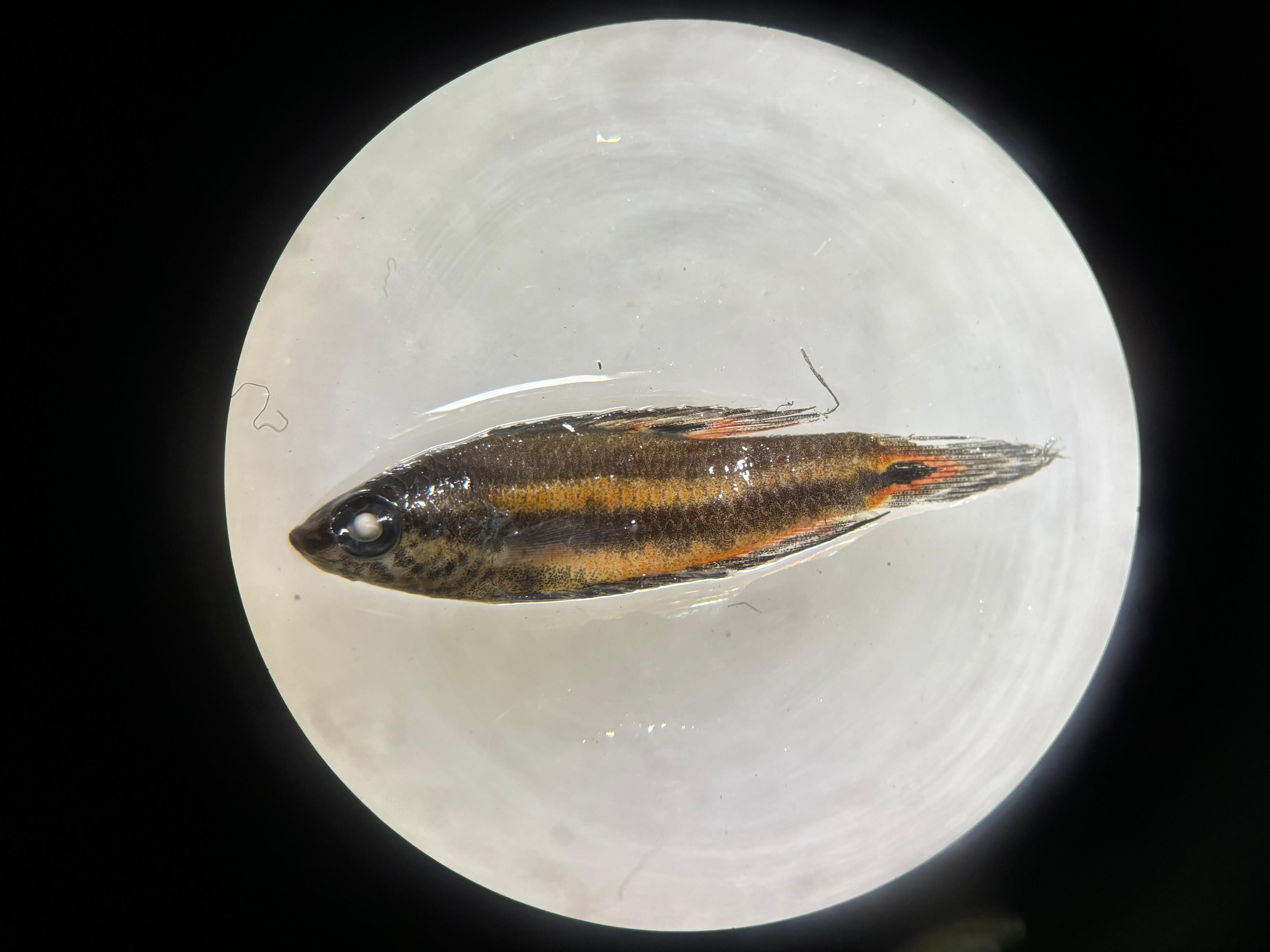
Rediscovery, Distribution Mapping, and Conservation Assessment of the Potentially Extinct-in-the-Wild Bornean Endemic Licorice Gourami Parosphromenus barbarae in Indonesian Peat Swamps
Parosphromenus barbarae was first described in 2020 from Sarawak, Malaysian Borneo. Since its initial description, dedicated research and peer-reviewed literature specifically addressing this species have remained non-existent, leaving its ecology, current status, and full geographical range poorly understood. Interestingly, while the species was long considered restricted to Sarawak, a 2024 field survey led to the unexpected discovery of a population in the peat swamp ecosystems of Ketapang, West Kalimantan, Indonesia. Featuring morphological characteristics closely matching P. barbarae, this finding highlights a potential new distribution record and a significant range extension for the species. Building upon this preliminary finding, this project aims to rigorously verify the taxonomic identity of the Ketapang population through detailed morphological analysis. Furthermore, the research will map the species’ spatial distribution and estimate population abundance across suitable peat swamp habitats in the region. To understand its ecological requirements, habitat quality and key environmental variables will be assessed alongside an evaluation of anthropogenic threats, such as peatland degradation and land-use change. Finally, the project will foster local community and stakeholder engagement to promote the conservation of endemic freshwater biodiversity. Ultimately, this study will bridge a long-standing knowledge gap and provide an essential scientific foundation for habitat protection, long-term monitoring, and conservation planning for P. barbarae.
This grant is funded as part of our Fonseca Leadership Program which was established by the Global Environment Facility (GEF). This fund supports young conservationists from developing countries.
The text and images for this case study are uploaded by the grant recipient to raise awareness of the conservation work being done. Through its website the Fund provides the platform, but is not responsible for text or image content of case studies. We would like to sincerely thank the recipient for uploading a case study.
