

Patagonia frog (Atelognathus patagonicus) Case Study
Home > Biodiversity Nature & People > Conservation Philanthropy > Grants > GEF Grant 250539273
Continent: South America
Country: Argentina
Grant Amount: $5,000
Awarded Date: December 09, 2025
Melisa Rolon
Facultad de Ciencias Naturales y Museo, Universidad Nacional de La Plata
22 1575
La Plata
Buenos Aires Province
1900
Argentina
Tel: (+54) 2213031146
Mob: (+54) 2213031146
Conservation Efforts for the Critically Endangered Patagonia Frog (Atelognathus patagonicus) in Argentina: Integrating Science and Stakeholder Engagement
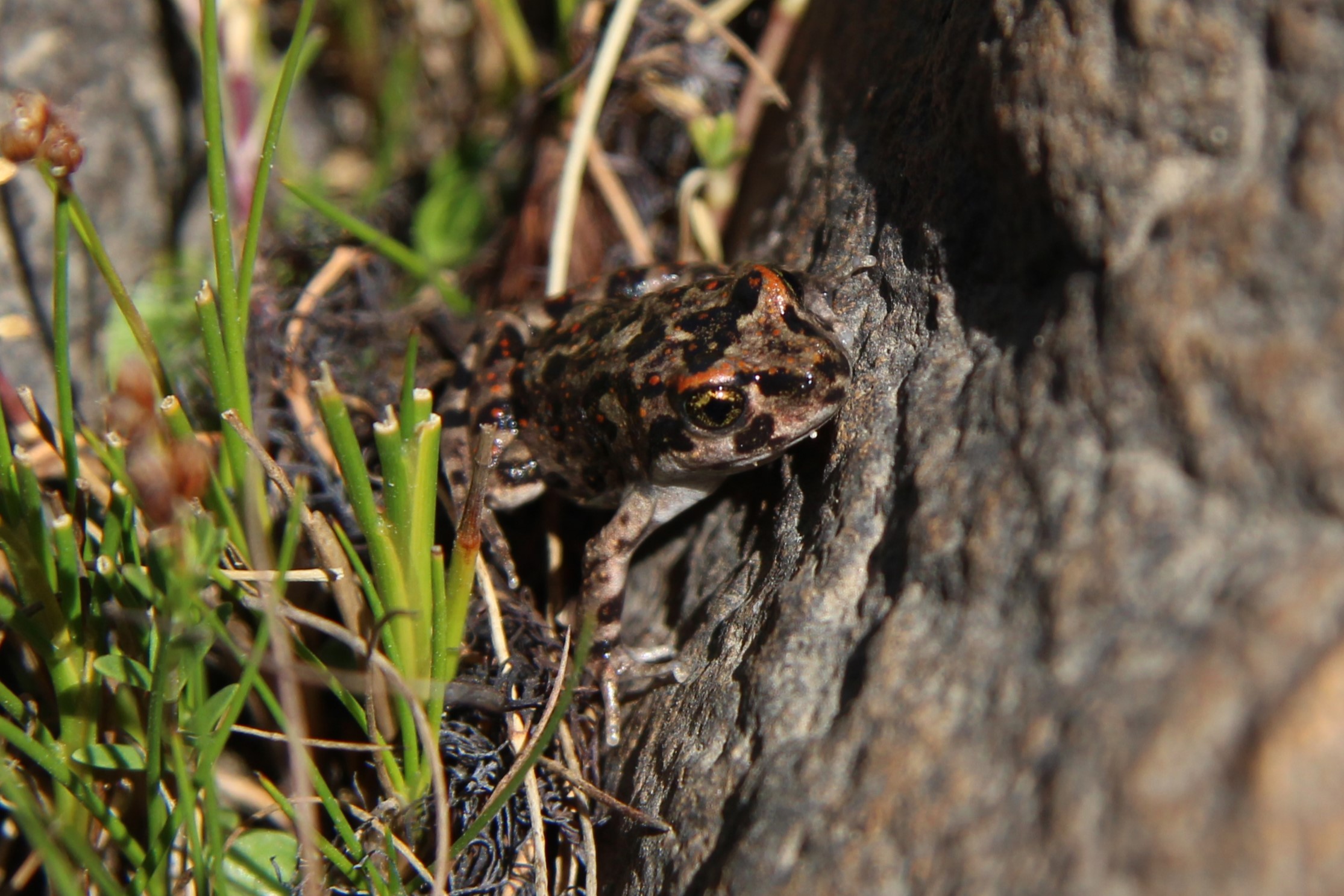
Our general purpose is to strengthen the long-term conservation of the Critically Endangered Patagonia frog by improving knowledge of its population status outside protected areas, enhancing local capacity for in-situ conservation actions, and reducing key human-driven threats through community engagement and education. To achieve this, we propose the following specific objectives: Objective 1. Assess the current status of at least four subpopulations located outside LBNP within one year, and compare them with subpopulations inside the park to evaluate the effectiveness of the protected area in conserving the species, within ten months of project initiation. Objective 2. Build local capacity by training LBNP park rangers and staff in amphibian monitoring protocols, habitat restoration techniques, and threat mitigation measures (e.g., reinforcing fences to exclude livestock), within six months of project initiation. Objective 3. Prevent the introduction of exotic fish by engaging local communities through awareness campaigns and at least one participatory workshop, to be implemented within the first eight months of the project.
This grant is funded as part of our Fonseca Leadership Program which was established by the Global Environment Facility (GEF). This fund supports young conservationists from developing countries.
The text and images for this case study are uploaded by the grant recipient to raise awareness of the conservation work being done. Through its website the Fund provides the platform, but is not responsible for text or image content of case studies. We would like to sincerely thank the recipient for uploading a case study.
