

Pileated gibbon (Hylobates pileatus) Case Study
Home > Biodiversity Nature & People > Conservation Philanthropy > Grants > MBZF Grant 11252987
Continent: Asia
Country: Cambodia
Grant Amount: $10,000
Awarded Date: March 01, 2012
Releasing rehabilitated Pileated gibbon in Cambodia
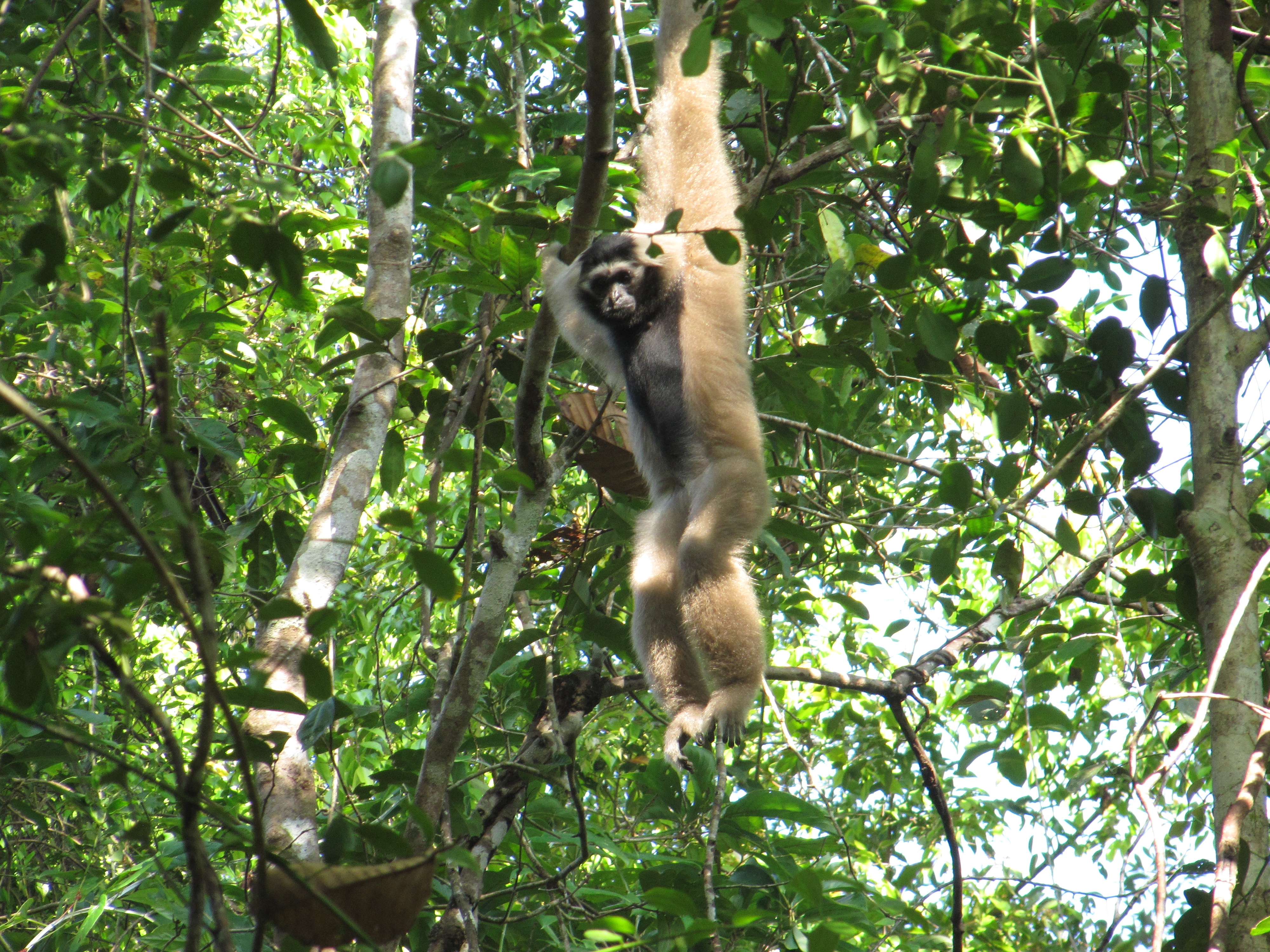
Cambodia's most prevalent species of wild ape, pileated gibbons are increasingly threatened by poaching, deforestation and the wildlife trade. This project enabled Wildlife Alliance to survey prospective gibbon release sites, receive government approval to release gibbons into the forest surrounding Angkor Wat, select a breeding pair and conduct environmental awareness and educational activities with local communities.
Wildlife Alliance is an international non-profit organization founded in 1994 and currently active in Cambodia. The organization’s mission is to provide direct protection to forests and wildlife. Wildlife Alliance has been working in Cambodia since 2000, assisting the government in managing its tropical forests, protecting its wildlife, and helping poor communities develop alternative livelihoods. We focus on the Cardamom Mountains, the second-largest intact forest in mainland Southeast Asia and a refuge for fourteen globally endangered and threatened species. Our program addresses short- and long-term threats to forests, wildlife, and rural communities, combining law enforcement and good governance; long-term management capacity; community-based agriculture and ecotourism; sustainable financing; rescuing, rehabilitating, and releasing wildlife victimized by the illegal wildlife trade; and environmental education and community outreach. In eleven years of field work, Wildlife Alliance has provided sustainable livelihoods to more than 2,600 people, delivered environmental education to 50,000 students and community members, rescued almost 50,000 live animals, and preserved 714,024 hectares of continuous rainforest.
Support from the Mohamed Bin Zayed Species Conservation Fund enabled us to focus on the rehabilitation and reintroduction of rescued pileated gibbons and their offspring (Hylobates pileatus). Pileated gibbons are Cambodia's most prevalent species of wild ape, but they are increasingly threatened by poaching, deforestation and the wildlife trade. Each year, Wildlife Alliance rescues pileated gibbons from the illegal trade or from those illegally keeping them as pets. Funding from the Mohamed Bin Zayed Species Conservation Fund enabled us to survey prospective gibbon release sites, receive government approval to release gibbons in the desired location of Angkor Wat, and select a suitable pair for release. Subsequently, after the close of our grant from Mohamed Bin Zayed Species Conservation Fund, we released the pair into the forest. They are currently raising offspring and have been followed by a second pair, which is also raising offspring.
Wildlife Alliance’s Kouprey Express mobile education unit conducted awareness raising activities for more than 37,000 community members and students during the project period to increase understanding of the threats facing pileated gibbons and the actions that they could take to ameliorate these threats.
The text and images for this case study are uploaded by the grant recipient to raise awareness of the conservation work being done. Through its website the Fund provides the platform, but is not responsible for text or image content of case studies. We would like to sincerely thank the recipient for uploading a case study.
