

Rock skipper (Andamia heteroptera) Case Study
Home > Biodiversity Nature & People > Conservation Philanthropy > Grants > MBZF Grant 12053408
Continent: Asia
Country: Indonesia
Grant Amount: $5,000
Awarded Date: February 07, 2012
Gatot Nugroho Susanto
Jl. Tentara Pelajar no.91
Wonosari
D.I.Yogyakarta
55813
Indonesia
Tel: N/A
Mob: +62878 392 19 204
Providing new information on the rock skipper in south of Java
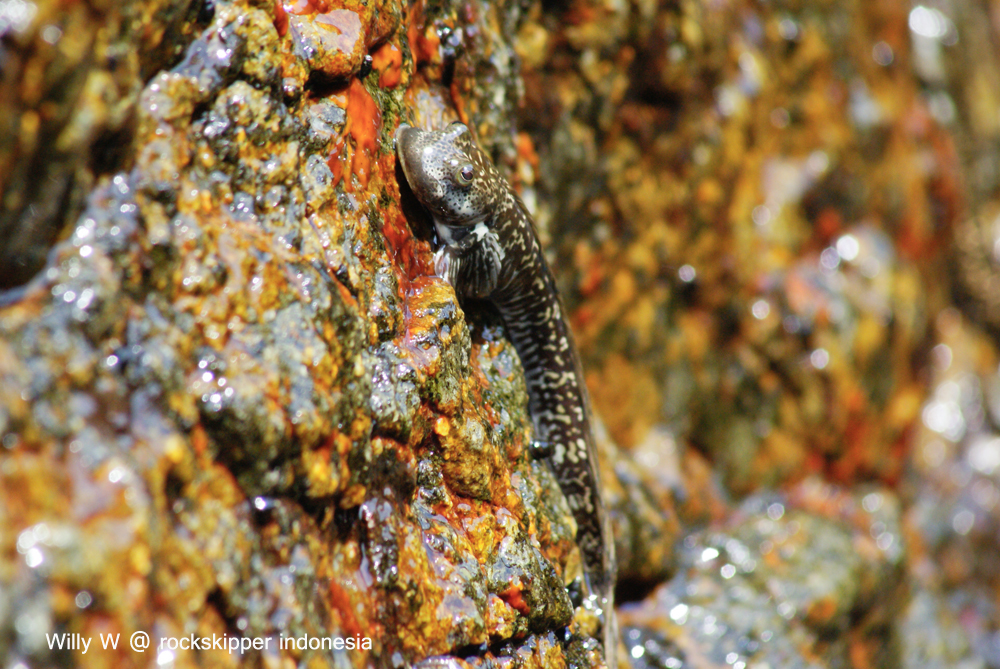
Rockskipper are fishes that can survive when out onto the watersurface. Recent research on rockskipper inIndonesia occurred around the year 1800. Project is located in Siung beach. The project's result showed that Andamia heteroptera as the abundant rockskipper fish in Siung beach. This species is unique that it has a tetrapod-like vertebrae while it also has a muscular structure resembling primitive fishes musculature.
Amphibious fishes are fishes that can survive when out onto the watersurface, one group is the skipper. Skipper is divided into two, rockskipper and mudskipper. Research on the diversity of mudskipper in Indonesia has been done but not on rockskipper. Recent research on rockskipper inIndonesia, especially the south coast of Java,occurred around the year1800. Until now,research on rockskipper in Indonesia has never been done again. Project is located in Siung beach. The Siung Beach is a place that has yet to be studied. The remote location and difficult tracks are some factors of the lack studies about the fishes on the beach. This location has a unique composition, with the karsts and andesite rocks, and has extreme weather, with high rate of the rainfall on rainy season and very low or none rainfall on dry season. These conditions create a perfect habitat for rockskipper, that may be difficult to find in other areas.
The objective of the project are :
1. To provide new information of rock skipper in south of Java.
2. To provide taxonomy, ecology, and behaviour information of rock skipper.
The project's result showed that Andamia heteroptera as the abundant rockskipper fish in Siung beach. This species is unique that it has a tetrapod-like vertebrae while it also has a muscular structure resembling primitive fishes musculature. Therefore, it will be interesting to conduct a further research on this species.
The text and images for this case study are uploaded by the grant recipient to raise awareness of the conservation work being done. Through its website the Fund provides the platform, but is not responsible for text or image content of case studies. We would like to sincerely thank the recipient for uploading a case study.

MBZF Grant 12053408 - located in Indonesia, Asia
Case Study Images


