

Widemouth gambusia (Gambusia eurystoma) Case Study
Home > Biodiversity Nature & People > Conservation Philanthropy > Grants > MBZF Grant 142510044
Continent: North America
Country: Mexico
Grant Amount: $12,000
Awarded Date: March 15, 2015
Michael Tobler
Kansas State University
116 Ackert Hall
Manhattan
Kansas
66506
United States
Tel: 785-532-6652
Mob:
Conservation of endangered evolutionary model systems inhabiting extreme environments
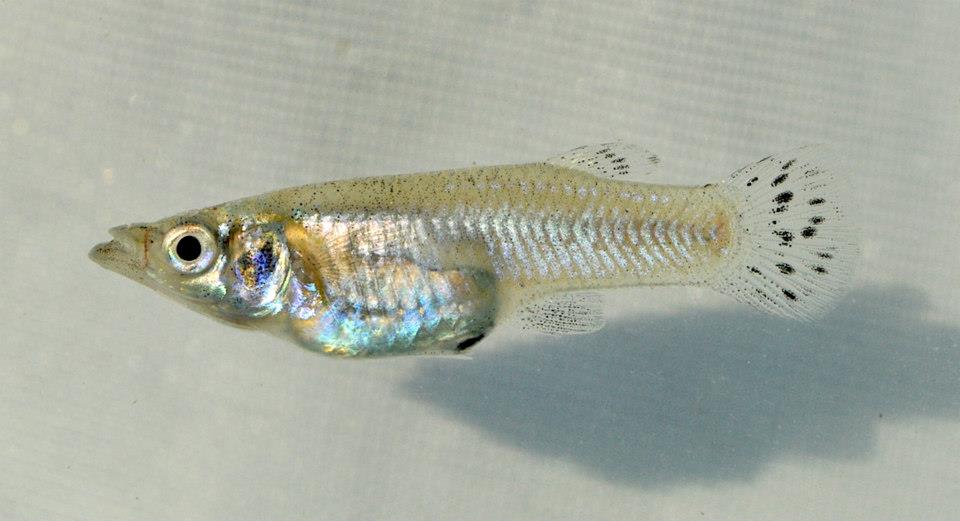
Mexico is home to hydrogen sulfide-rich springs so toxic that few organisms can survive in them. This project aims to preserve highly endemic fish that have adapted to these extreme environments. The project particularly focuses on Gambusia eurystoma, which is only known from a single sulfide spring complex. It also pertains to other micro-endemics in the area (Poecilia sulphuraria and P. thermalis).
Southern Mexico is home to some of the most extreme freshwater environments in the world. Only few organisms have evolved to successfully cope with the toxicity found in hydrogen sulfide-rich springs. Many of them are highly endemic, only occurring in one or a few spring complexes that provide suitable environmental conditions. The current project particularly focuses on the balneario "Baños del Azufre" near Teapa, Tabasco. This is a complex of warm, sulfide springs where locals come to swim, relax, and barbecue. Once dense forest, the land directly around the Baños del Azufre was clear-cut many decades ago. Until recently, the area adjacent to the springs was primarily used as grazing pastures for cattle. In the last few years, however, we have witnessed massive land-use changes in the form of the installation of palm oil tree plantations. Such palm oil plantations had notorious impacts on endangered species around the world. Deforestation and understory death resulting from these plantations lead to increases in erosion, unnatural sediment loads in streams, and negative consequences for aquatic biodiversity.
The Baños del Azufre springs represent the key focal habitat for this project, because it is the only confirmed locality for two critically endangered fish species: Gambusia eurystoma (large-mouth mosquitofish) and Poecilia sulphuraria (sulfur molly). The small habitat, small population sizes, and impending ecosystem alterations make the Baños del Azufre a priority to protect these species. In addition to this primary sulfide spring site, the project will also survey two other spring complexes in the surrounding area, where other populations and species of endemic fish have been recorded. The project will focus on ecological assessments and conservation genetic analyses to develop management solutions for the effective conservation of these unique species.
More information on our research can be found on http://www.sulfide-life.info/mtobler/
The text and images for this case study are uploaded by the grant recipient to raise awareness of the conservation work being done. Through its website the Fund provides the platform, but is not responsible for text or image content of case studies. We would like to sincerely thank the recipient for uploading a case study.
