

Yucatan Box Turtle (Terrapene yucatana) Case Study
Home > Biodiversity Nature & People > Conservation Philanthropy > Grants > GEF Grant 252539602
Continent: North America
Country: Mexico
Grant Amount: $9,300
Awarded Date: December 02, 2025
Carlos M. Delgado-Martinez
Turtle Survival Alliance
5900 Core Rd Suite 504
North Charleston
SC
29406
United States
Tel: (843)724-9763
Mob:
Foundations for turtle conservation in Calakmul, Mexico: Ecology, Road Mortality, and Community Engagement
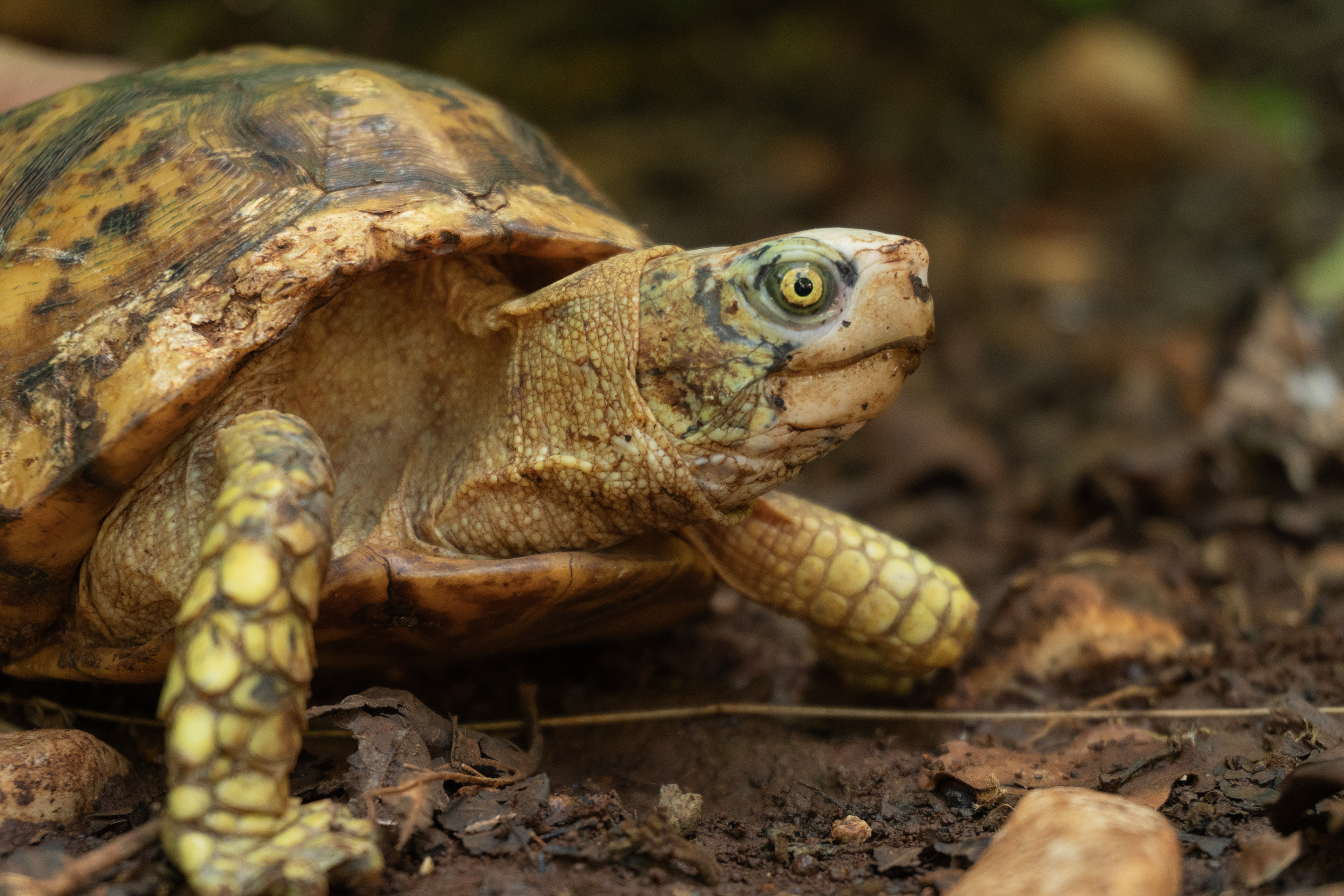
This project will produce several key deliverables that contribute both to species-specific conservation goals and broader ecological understanding. For the threatened species targeted, particularly Terrapene yucatana (EN), we aim to collect comprehensive morphological data, blood samples, and roadkill records. These data will inform mitigation strategies developed in collaboration with the Calakmul Biosphere Reserve to reduce turtle mortality along roadways. A major benchmark will be the registration of at least 10 live T. yucatana individuals. A core deliverable will be the identification of high-density zones and preferred microhabitats for T. yucatana, which is known to occupy distinct microhabitats from the semi-terrestrial Rhinoclemmys areolata. Additionally, we will assess how turtle density for each species varies across a gradient of disturbance levels, including proximity to roads, agricultural land, and human settlements. This will support evidence-based recommendations for land management and conservation prioritization within and around the reserve. Finally, the project includes a community outreach component. We plan to distribute at least 500 comics and 500 leaflets to local residents, aiming to increase awareness about turtle conservation and promote community involvement in protecting local biodiversity. This direct engagement will serve as an essential outcome, fostering long-term conservation support in the region.
Grant document
This grant is funded as part of our Fonseca Leadership Program which was established by the Global Environment Facility (GEF). This fund supports young conservationists from developing countries.
The text and images for this case study are uploaded by the grant recipient to raise awareness of the conservation work being done. Through its website the Fund provides the platform, but is not responsible for text or image content of case studies. We would like to sincerely thank the recipient for uploading a case study.
