
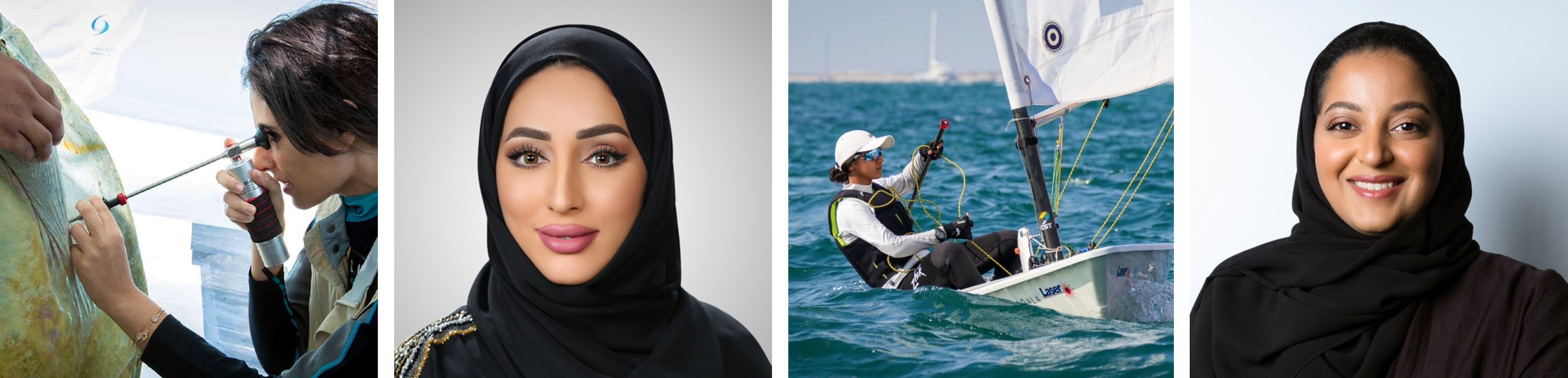
In every vibrant and progressive society, inspiring stories of strength, creativity, and dedication emerge. Emirati Women’s Day offers a unique opportunity to spotlight these narratives, which reflect the spirit of excellence and perseverance. Today, we celebrate the remarkable achievements of Emirati women who have made significant contributions across diverse fields, from environmental protection to sports and scientific research.
The journey of the Mohamed bin Zayed Species Conservation Fund began with Her Excellency Razan Al Mubarak, whose tireless dedication over two decades to preserving endangered species and promoting environmental conservation has been truly inspiring. Building on her legacy, we also honour other notable women, including Dhuha Albeshr, a sailor and conservation student, Khawla Al-Shehhi, a diving instructor and marine researcher, and Dr Hind Al Amri, a Marine Biodiversity Conservation Specialist, all united in their goal of ensuring a sustainable environment for future generations.
Through their achievements, we see how Emirati women are shaping the future by merging scientific excellence with the preservation of our environmental and cultural heritage. In this esteemed celebration, the MBZF reaffirms the vital role of women in driving progress and sustainability, honouring their contributions that inspire future generations to reach even greater heights.
Dhuha Albeshr
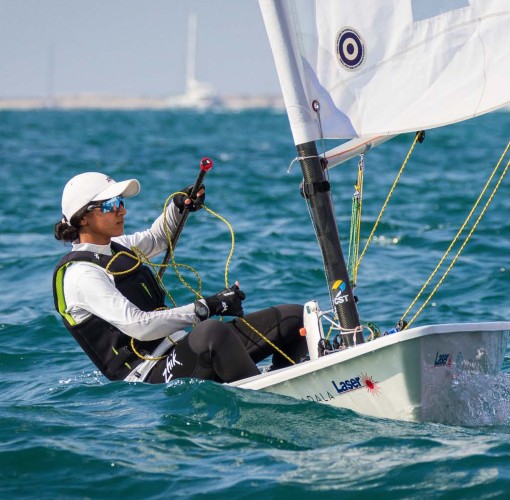
Dhuha Albesr is an inspiring figure in both sailing and environmental sustainability. As an international sailor representing the United Arab Emirates, she combines her love for the sport with a strong commitment to environmental protection. Currently studying Environmental Science and Sustainability at Zayed University, Dhuha emphasises the importance of preserving our natural world for future generations.
In 2024, she was honoured as the Arab Champion in Sailing, a testament to her years of dedication. Encouraged by her father, Dhuha began her sailing journey at age eleven. Her achievements include completing the Level 3 Instructor Course from the International Sailing Federation, which has prepared her to be an inspiring coach and mentor.
Dhuha’s participation in the SailGP race as a candidate for Mubadala Energy Inspire in Abu Dhabi was a standout moment, showcasing her pride in representing her country. She has also been given the opportunity to compete in the SailGP event in Chicago, which will be a dream come true.
With aspirations to compete in the Los Angeles 2028 Olympics, Dhuha views sailing not just as a sport but as a way of life that teaches discipline, perseverance, and goal setting and cannot wait for a chance to represent the United Arab Emirates on the global stage.
Childhood journey
Dhuha’s passion for the ocean started as a young child as she spent countless hours on the UAE’s beaches with her family. She was captivated by the crashing of the waves and the small marine creatures that emerged among the rocks. This innate love for the sea and nature inspired Dhuha to delve deeper into the marine world, prompting her to seek answers on how to protect this invaluable resource.
Passion for sports
Dhuha’s journey into sailing was no coincidence; it stemmed from her relentless pursuit to express her love for the ocean. Through sailing, she discovered a profound sense of freedom—both physically and mentally. It offered her a chance to reflect and forge a deep connection with nature, away from the hustle and bustle of everyday life. This spiritual bond with the sea significantly shaped her character, instilling in her the importance of protecting the natural environment she cherishes as a source of inspiration and tranquillity.
Academic Education
As time went on, Dhuha chose to channel her passion for the sea into a scientific career by pursuing a degree in Environmental Science and Sustainability. Enrolling at Zayed University marked a significant milestone in her academic journey, providing her with the opportunity to deepen her understanding of the environmental challenges. Throughout her studies, Dhuha concentrated on the effects of human activities on marine ecosystems and explored how scientific solutions can drive positive change.
International exposure
Dhuha’s experiences as a global sailor were an integral part of developing her environmental vision. Through her participation in international sailing competitions, she had the chance to explore many seas and oceans around the world, observing the environmental changes taking place in these areas.
Dhuha views sailing as more than just a sport; it is a powerful tool for learning and raising awareness. By witnessing environmental changes in marine areas, she has deepened her commitment to advocating for marine conservation. Through her international participation, she aims to highlight the importance of protecting our oceans and encourages her fellow sailors to embrace sustainable practices in both their sport and daily lives.
The role of woman in sports
As a woman in marine sports, Dhuha faced significant challenges, including breaking stereotypes about women’s roles in this domain. With her determination and the unwavering support of her family, she overcame these obstacles and emerged as a proud representative of Emirati sailing.
Dhuha believes that women’s involvement in marine sports extends beyond mere competition; she envisions them as potential leaders and mentors in the field. She actively encourages young girls to participate in marine sports and discover their capabilities. Dhuha is convinced that sports can enhance self-confidence and empower women to pursue their dreams, both in athletics and beyond.
Participation in sustainable sporting events
Dhuha considers Emirati Women’s Day as an ideal opportunity to emphasise the importance of integrating sports with environmental preservation. She calls on everyone to take responsibility for the environment and to adopt sustainable practices in their daily and sporting lives. She believes that sports can be a powerful tool for spreading environmental awareness and encourages athletes to be role models in this field.
One of Dhuha’s standout qualities is her dedication to participating in sporting events that prioritize sustainability. An amazing example of this is her role with the SailGP sustainability team, where she sees a unique opportunity to merge her passion for sports with her commitment to environmental conservation. Dhuha actively engages in initiatives designed to minimise the environmental impact of sporting events, advocating for reduced plastic use and promoting eco-friendly travel options.
Inspiration and empowerment
Beyond her roles as a sailor and environmental science student, Dhuha considers herself an ambassador for the marine environment and a source of inspiration for future generations. She is dedicated to guiding Emirati youth in caring for and preserving the environment through awareness programs and community engagement. Dhuha firmly believes that today’s youth hold the key to safeguarding our planet, and that instilling sustainable practices in them from an early age is essential for a brighter future.
Dhuha Albesr – A Role Model for Young Emirati Women
In conclusion, Dhuha Albesr represents a remarkable example of a young Emirati woman who combines a passion for science with a love for sports and strives to balance working to protect the environment with pursuing her favorite hobby. On Emirati Women’s Day, we celebrate Dhuha as a symbol of creativity, ambition, and commitment. She is a reminder that Emirati women are capable of achieving anything they set their minds to, and they play a vital role in protecting our environment and preserving our environmental heritage.
In conclusion, Dhuha Albesr exemplifies the remarkable potential of a young Emirati woman who harmoniously blends her passion for science with her love for sports. She works to protect the environment while pursuing her favourite hobby. On Emirati Women’s Day, we celebrate Dhuha as a symbol of creativity, ambition, and dedication. She serves as a powerful reminder that Emirati women can achieve anything they set their minds to, playing a crucial role in safeguarding our environment and preserving our ecological heritage.
Khawla Al-Shehhi

Khawla Al-Shehhi is a graduate of the Higher Colleges of Technology, holds three degrees: a Master’s in Languages and Business Administration, a Diploma in French, and proficiency in Spanish, along with a basic understanding of Italian.
Khawla’s connection to the sea began with her love for swimming, nurtured by lessons from her father. Her true passion flourished during a transformative trip to Zanzibar, where she discovered diving and the wonders of marine life. This experience led her to pursue professional diving, allowing her to witness breathtaking underwater moments, including encounters with sperm whales in Mauritius.
Dedicated to promoting the beauty of the ocean, Khawla captures her underwater experiences to inspire others. She encourages her entire family to explore marine life and instils in them a commitment to environmental conservation.
Khawla Al-Shehhi embodies a remarkable blend of academic achievement and personal passion, making her a distinguished role model.
A journey into science
Over the years, Khawla passion for the sea has evolved from a love for diving into a commitment to scientific research. She noticed the subtle environmental changes in the oceans, driven by both climate change and human activities. This awareness sparked her curiosity and prompted her to explore critical questions: How can we safeguard these vital systems from degradation? How can we strike a balance between human use and the conservation of nature?
Focus on endangered species
Through her research, Khawla has focussed on endangered marine species and one of her memorable projects involved studying marine snails or “sea butterflies” as they are often referred to. These delicate creatures are particularly vulnerable to environmental changes, and Khawla’s goal is to understand how climate change and pollution impact these beautiful species.
Her work goes beyond theoretical research; she is actively engaged in developing practical strategies to protect these species from extinction. A key aspect of her efforts includes documenting these snails and conducting genetic studies to explore their adaptive responses to environmental changes.
Photography as a tool
Khawla also uses her photography skills to capture the beauty of marine creatures and shine a light on the challenges they face. For her, photography transcends mere artistry; it is a powerful medium for conveying critical environmental messages. Her underwater images showcase the rich biodiversity of the seas and serve to raise awareness about the urgent need to preserve these fragile ecosystems.
Khawla considers photography an essential component of her scientific endeavours. She firmly believes that a single image can convey more than a thousand words, particularly when illustrating the beauty and significance of nature. Through her photographs, she aims to inspire people to be more mindful and proactive in protecting the marine environment.
Challenges and perseverance
Like many women breaking barriers in unconventional fields, Khawla encountered a myriad of challenges. As one of the first Emirati women to venture into professional diving, she faced both social and professional hurdles, including scepticism about women’s roles in such environments. With the support of her family and her own determination to succeed, she triumphed over these obstacles.
Beyond societal challenges, Khawla also navigated significant professional difficulties. Working in marine environments demands both physical stamina and mental resilience, especially in the face of challenging underwater conditions. Yet, Khawla persevered, fuelled by pure grit and determination. She reflects on her journey as “a path filled with challenges, but every effort has been worthwhile.”
Empowerment and community contribution
In addition to her roles as a scientist and researcher, Khawla views her position as a diving instructor as a vital contribution to her community. She believes that training new divers is an opportunity to instil essential values of environmental conservation. She organises training sessions designed to teach aspiring divers not only the techniques of diving but also the ethical considerations of engaging with the marine ecosystem.
Seeking balance
Despite her numerous accomplishments, Khawla recognizes the vital importance of maintaining a balance between her professional and personal life. She believes a balance between work and family life is one of the key factors behind her achievements.
Looking Ahead
Looking ahead, Khawla is determined to further her work in scientific research and photography, with a focus on exploring new marine areas and documenting endangered marine species. She also plans to launch new initiatives aimed at enhancing environmental awareness within the Emirati community, particularly through educational programs for children and youth.
Khawla Al-Shehhi – A Role Model for Every Emirati Woman
Khawla Al-Shehhi exemplifies the remarkable potential of Emirati women who seamlessly blend passion, science, and art in their pursuit of a brighter future. Her journey is not merely a story of personal triumph; it embodies the aspirations and dreams of an entire generation of Emirati women. We honour Khawla Al-Shehhi not only as a scientist, photographer, and diving instructor but also as a powerful symbol of creativity, ambition, and commitment.
Dr Hind Al Amri

Dr Hind Al Amri is a prominent advocate for marine life conservation in the UAE, serving as a Marine Biodiversity Conservation Specialist at the Environment Agency – Abu Dhabi. Her research plays a crucial role in providing essential scientific data to protect marine species from extinction.
With a Bachelor’s in environmental sciences, a Master’s in Biodiversity Conservation from the University of Leeds, and a Ph.D. in Biological Sciences from the University of Exeter, Dr Hind focuses on the conservation of hawksbill turtles, vital to the UAE’s marine ecosystem.
Her efforts extend to enhancing critical habitats like mangroves, coral reefs, and seagrasses through field research. As part of the “Wildlife Rescue and Rehabilitation Program,” she works to protect marine turtles by tracking their migration routes and conducting surveys of nesting beaches. Recently, she revealed their remarkable adaptability to harsh environmental conditions, underscoring their resilience.
Early beginnings
Dr Hind’s passion for marine turtles originated from her profound interest in marine life and biodiversity. She was particularly captivated by the unique challenges these creatures encounter, including environmental threats and climate change. She explains, “Engaging with nature, studying turtle behaviour, and witnessing the effects of conservation efforts on their survival have only intensified my commitment to this field.”
Major challenges
Dr Hind addresses the significant challenges confronting marine turtles in the UAE, including habitat degradation, climate change, and artificial lighting. She highlights the importance of promoting environmental sustainability initiatives, supporting research and scientific studies, and implementing effective strategies to manage coastal lighting as key solutions to these pressing issues.
Connection with marine environment conservation
Dr Hind’s efforts to protect marine turtles are intricately connected to broader conservation initiatives aimed at safeguarding the marine environment. Turtles are essential to the marine ecosystem, helping to maintain the balance of the food chain and serving as key indicators of overall marine health.
Environmental impact
Climate change has a direct effect on marine turtles, especially how they adapt to temperature fluctuations, rising sea levels, and developing adaptive strategies. Dr Hind explored the pivotal roles of both the agency and the Mohamed bin Zayed Species Conservation Fund in safeguarding marine turtles. We also discussed how these initiatives, under the leadership of Her Excellency Razan Al Mubarak, Managing Director of both organizations, contribute to broader local and global conservation efforts.
The role of agencies in protecting marine turtles
The Environment Agency – Abu Dhabi’s efforts are pivotal in protecting marine turtles at the local level. These efforts include accurately monitoring nesting sites, implementing advanced protection measures to keep these sites safe from human interference and natural threats, and conducting awareness campaigns targeting local communities to increase awareness about the importance of marine turtles and their role in the ecosystem. These efforts reflect the agency’s commitment to preserving biodiversity and conserving the marine environment.
The Mohamed bin Zayed Species Conservation Fund
Globally, the Mohamed bin Zayed Species Conservation Fund provides significant support to conservation projects through grants for initiatives focused on marine turtles and other endangered species. These grants help implement research and conservation programs that effectively contribute to species conservation and promote environmental sustainability. Dr Hind points out that the support from the fund enhances international initiatives and helps achieve tangible results on the ground.
Importance of integrated conservation
Dr Hind underscores that merging local and international efforts significantly enhances the effectiveness of conservation initiatives, ensuring sustained progress in environmental and species protection. This integrated approach fosters meaningful and tangible improvements in safeguarding marine turtles and promoting the sustainability of their habitats.
These collaborative efforts exemplify how partnerships between local agencies and global funds can profoundly impact biodiversity conservation and sustainability, solidifying the UAE’s position as a leader in environmental and species conservation.
Dr Hind Al Amri: Together we can do better
Dr Hind emphasizes the vital role of collaboration between local communities and authorities in protecting marine turtles and the broader marine environment. She highlights that education and awareness are crucial in enhancing the effectiveness of conservation efforts for these critical habitats.
Dr. Hind Al Amri, an inspiring leader, exemplifying how women can make a meaningful impact on biodiversity conservation and environmental sustainability. Together, we can create a profound and far-reaching impact that benefits both the marine environment and society at large.